

Wuxia in Cinema and Music
Wuxia, a genre filled with heroes and legends, is a genre so deeply ingrained in our cultural imagination that many film composers have ventured into its mystical world, weaving exotic instruments into their scores to bring its spirit to life. In this journey, we’ll uncover how these composers drew inspiration from traditional Chinese ideals, reimagining Wuxia as a rich, multi-dimensional experience that fuses music with moving images in the modern era.
From the Voice of Native
.JPG)

Composer, Tan Dun © "Tan Dun" by Iluv2write is licensed under CC BY-SA 4.0

Our first example features the renowned composer Tan Dun (譚盾). A native of Changsha, China, Tan Dun has long been fascinated by the rituals and ceremonies of his hometown. His early musical journey began with a local ensemble, where he learned to play traditional Chinese instruments such as the erhu. This formative experience later proved invaluable, equipping him with the skills to write effectively for Chinese instruments in his compositions.


Crouching Tiger, Hidden Dragon, animated © AI Generated Images (Freepik)
Tan Dun’s expertise in traditional Chinese instruments is beautifully showcased in Crouching Tiger, Hidden Dragon. To express solitude and inner conflict, he employed solo instruments — most notably the cello. To enhance the spiritual tone of the score, Tan invited world-renowned cellist Yo-Yo Ma to perform the solo parts. Remarkably, Tan later expanded this material into a full cello concerto, demonstrating his mastery in blending Chinese and Western musical traditions. This fusion not only deepened the emotional resonance of the film but also elevated the Wuxia spirit through music.
When Wuxia meets The West


Composer, Hans Zimmer © "Hans Zimmer" by Richard Yaussi is licensed under CC BY 2.0
.jpg)
When Wuxia music swept across the western world, movie composer Hans Zimmer become one of the composers who brought the spirit to the Western Animated Movie, Kung Fu Panda. Zimmer discovered many Wuxia elements in the soundtrack, he crafted a hybrid “Chinese-Western” sound, blending traditional motifs with cinematic orchestration to recite the story of an aspired hero, Po — a panda destined to become the Dragon Warrior and save his village.
.jpg)

Kung Fu Panda statue © "Kung Fu Panda Statue" by Nancy Anburaj is licensed under CC BY-SA 4.0

One of the most remarkable moments in Kung Fu Panda is captured in the score is “Oogway Ascends”. In this scene, Master Oogway entrusts his final wish to his apprentice Shifu — to nurture Po’s potential. Much like Tan Dun, Hans Zimmer uses a solo instrument to evoke a sense of spiritual enlightenment. To express the emotion of farewell, Zimmer incorporates the erhu and harp, creating a delicate, transcendental soundscape. As Oogway’s soul gently ascends to the spirit realm, the music gradually fades into silence, symbolising his peaceful passing and the profound serenity of his departure.

From the World of Wuxia
Today, Wuxia music continues to appear in films, television series, and video games. The evocative soundscapes behind these heroic tales have become increasingly recognisable, thanks to the dedication of composers who bring their unique styles to the genre. Through their contributions, Wuxia music has evolved into a familiar and celebrated sound in global media.

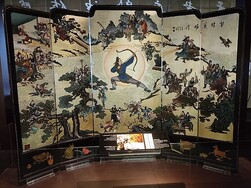
"HK Heritage Museum Jin Yong Gallery in June 2022" by TAMYAMMIA SHA is licensed under CC BY-SA 4.0

- Wuxia: A genre of Chinese fiction that focuses on martial arts heroes in ancient China
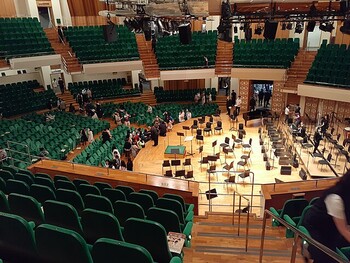
"Hong Kong Cultural Centre Concert Hall " by Luywuem BOAILIHS is licensed under CC BY-SA 4.0

- Soundscape: The overall acoustic environment or “sound picture” of a place or scene
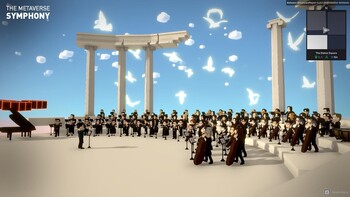
Animation from The Metaverse Symphony, Elliot Leung (2023)
Image courtesy of The Sandbox
- Multi-Dimensional Experience: An experience that engages multiple senses or aspects at the same time, creating depth and richness

- What kind of music do you imagine when a hero is flying across mountains?
- Why do you think Wuxia music often uses traditional Chinese instruments like the Erhu or Pipa?
- If you could create your own Wuxia theme song, what mood would it have — calm, powerful, or mysterious?
By Kent Lam (2025)