

Classical Music in Video Games (Episode 1)
Playing video games is exciting and fun. For many of us, it’s a fun way to dive into a world of fantasy, where we level up with a sense of progress and achievement.
But have you ever noticed that many video games use classical music? These pieces help shape the game’s atmosphere, enhancing the overall experience for players. Join us on a journey to discover the fascinating sounds behind the world of video games.


Crash TwinSanity © "Crash TwinSanity Logo " by Traveller's Tales/Vivendi Universal Games is in the Public Domain, CC0

First up is Crash TwinSanity. One of the themes used in the Walrus Chase scene is a fast-paced a cappella version of Felix Mendelssohn’s orchestral overture The Hebrides (Fingal’s Cave). From a creative standpoint, the use of this piece likely hints at the sea — fitting, since the walrus is a marine animal. The original overture evokes the ocean’s atmosphere, making it a perfect match for the setting.
What’s clever is how Crash TwinSanity transforms the overture into an a cappella version with a quicker tempo. This adds a sense of urgency and tension to the chase, while keeping the tone light and humorous thanks to the quirky vocal arrangement.


Tetris © "Tetris Logo" by Tetris Company is in the Public Domain, CC0

Another great example is Tetris.This classic game was one of the hottest titles of the 1990s, and it features a simple yet unforgettable theme that many people still recognise today. The theme was adapted from a Russian folk song called Korobeiniki. It was rearranged by Japanese video game composer Hirokazu Tanaka and eventually became the childhood game from the children of the 1990s.
Besides the iconic Tetris theme, the game also features other classical music pieces — one of them being quoting “The Dance of the Sugar Plum Fairy” from Tchaikovsky’s Nutcracker Suite. This soft and whimsical melody fits perfectly with a puzzle game like Tetris, creating a fairy tale–inspired atmosphere as players focus on filling the blocks.


Maestro, Masterclass (2024) © "Maestro" by Double Jack is licensed under CC BY 4.0
Some technologies are specifically designed to enhance user experience, with Virtual Reality (VR) being one of the most notable examples. Using a headset and motion controllers, users can immerse themselves in a virtual environment. A compelling case is the VR game Maestro (2024), which features a wide range of classical repertoire, including Verdi’s Requiem. The game offers a highly realistic simulation of conducting an orchestra, requiring players to lead performances and respond to tempo and rhythm — closely mirroring the skills of a real-life conductor. With Verdi’s breathtaking Requiem, players can fulfil their dream of becoming a virtual conductor, guiding the orchestra to its dramatic climax.

In the next episode, we’ll explore the original music of video games — masterfully composed to bring their fantasy worlds to life. Join us on this exciting journey as we uncover more fascinating games and the stories behind their soundtracks.


A performance by an A-capella Quintet © "BLISS A-capella Quintett 2022.jpg" by Geca001 is licensed under CC BY-SA 4.0
A capella: (Italian for “in the manner of the chapel”) refers to vocal music performed without instrumental accompaniment.
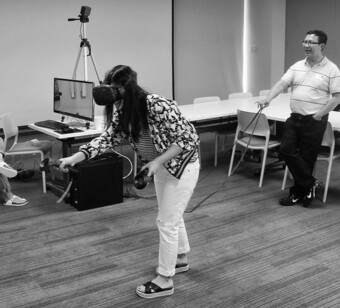
Virtual Reality © Wikimedia Commons
Virtual Reality (VR): Virtual Reality is a type of technology that lets you experience and interact with a computer-made world, as if you were really there. You usually wear a headset that shows 3D images and tracks your movements.
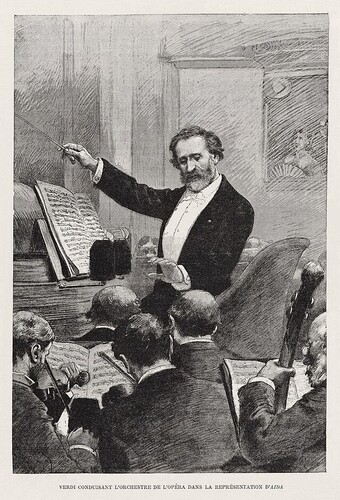
Composer Verdi conducting the orchestra © Wikimedia Commons
Conductor: the person who leads an orchestra, choir, or other musical group. They guide the musicians during a performance by using hand movements or a baton to show tempo, dynamics, and expression.

- Do you have a favourite video game that you have enjoyed the most?
- Is there a piece of music from that game that you particularly love?
- If you play an instrument, have you ever tried performing music from a video game?
By Kent Lam (2025)